Designing Architectural Concrete Floating Steps
Designing Them Properly From the Start for Seamless Integration with Your Home
Concrete floating steps can transform the entry to your home, creating a striking first impression that blends architecture with landscape. When designed well, these steps feel like a natural extension of your house, guiding visitors smoothly from the driveway or path to your front door. But if they are not planned carefully, floating steps can look awkward, feel heavy and look out of place.
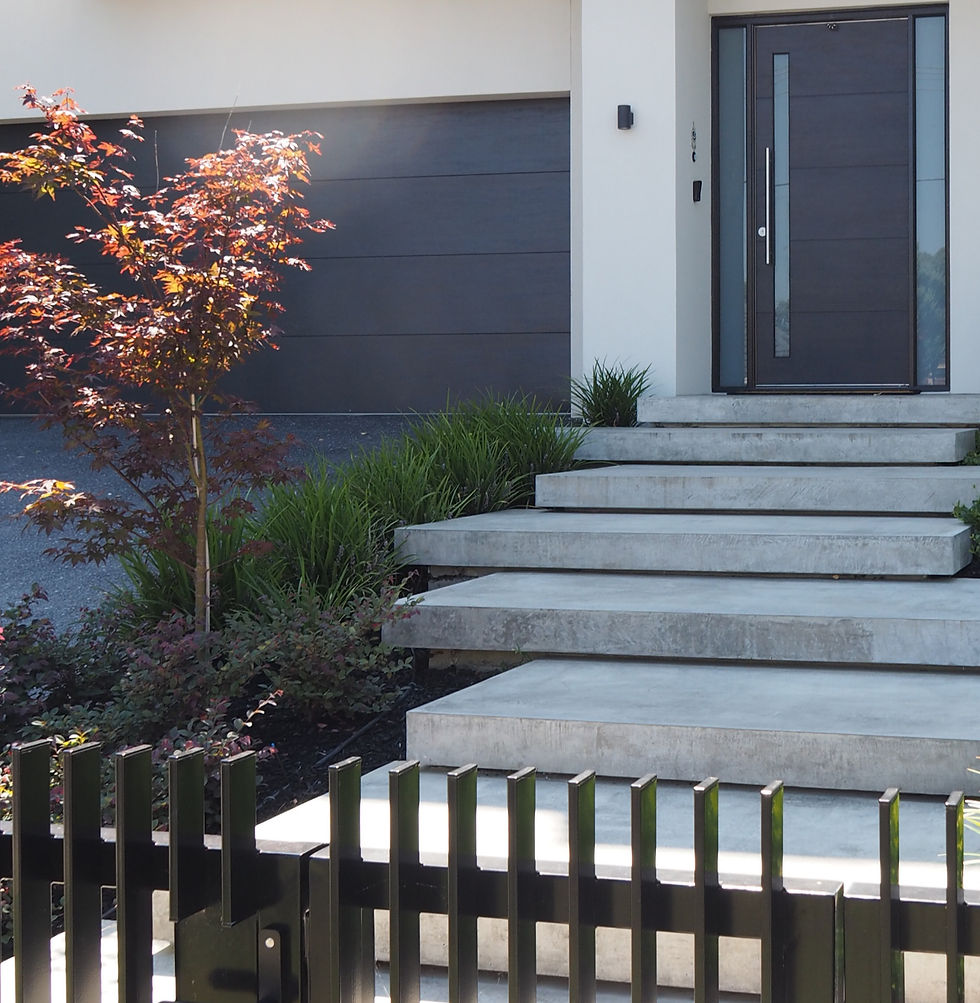
Concrete Floating Steps are shaped by your sites levels.
Before selecting finishes or determining the spacing between steps, it is essential to address the levels. Understanding the site's topography, as well as the levels of entryways, driveways, and paths, is crucial for designing the appropriate entrance.
Concrete floating steps can elevate your home’s entrance when designed with care. The key is to treat them as part of the architecture, not just functional stairs. Align them with your house’s main axis, lock in consistent levels early, create separation for the floating effect, and pay close attention to setout and proportion.
By focusing on these elements from the start, you will create a strong, elegant entry sequence that enhances your home’s curb appeal and lasts for years. If you are planning new steps or upgrading existing ones, take the time to design them properly. Your front yard and visitors will thank you.


Comments